A hall of fame of AI slop — what it is, and the exact tells that expose it.
AI slop is low-value content mass-produced with artificial intelligence and published with little or no human review. The word borrows from farmyard feed: cheap filler, shoveled in volume. Slop is not simply "anything made by AI" — a drafted, fact-checked, human-edited piece is not slop. Slop is unreviewed bulk output wearing the costume of real content: images of events that never happened, videos of people who do not exist, articles that restate the prompt in confident paragraphs.
It exists because generation is now nearly free while attention still pays. Engagement-optimized feeds reward whatever earns a click, so operators generate thousands of variations, post them everywhere, and let the algorithms sort the winners. Readers get the leftovers: fake recipes that could make you sick, cloned voices selling scams, "news" that no one reported, and product photos for things that cannot exist.
The examples below are organized by type. Each one illustrates a real, widely reported slop pattern, with the exact tells that give it away. All images are illustrations generated for this page — none are real viral images — because reposting slop is how slop spreads.
Generated images are the loudest form of AI slop. They flood feeds because they are cheap, emotional, and — at first glance — photographic. Every example below is an illustration of a real, widely reported slop phenomenon, annotated with the exact visual tells that give it away. Count the fingers. Follow the arms. Watch the light.
Example generated for illustration. Not a real viral image.
Shrimp Jesus
Why it's slop: A religious figure fused with seafood, engineered to farm shocked likes and comments from unsuspecting Facebook users — the defining image of the slop era.
How to spot it: The anatomy melts exactly where the figure meets the seafood: skin flows into shell with no boundary, the lighting on the face ignores the background, and the proportions drift between body parts.
Reported: Shrimp Jesus became the emblem of engagement-farming AI images on Facebook. Wikipedia — Shrimp Jesus
Example generated for illustration. Not a real viral image.
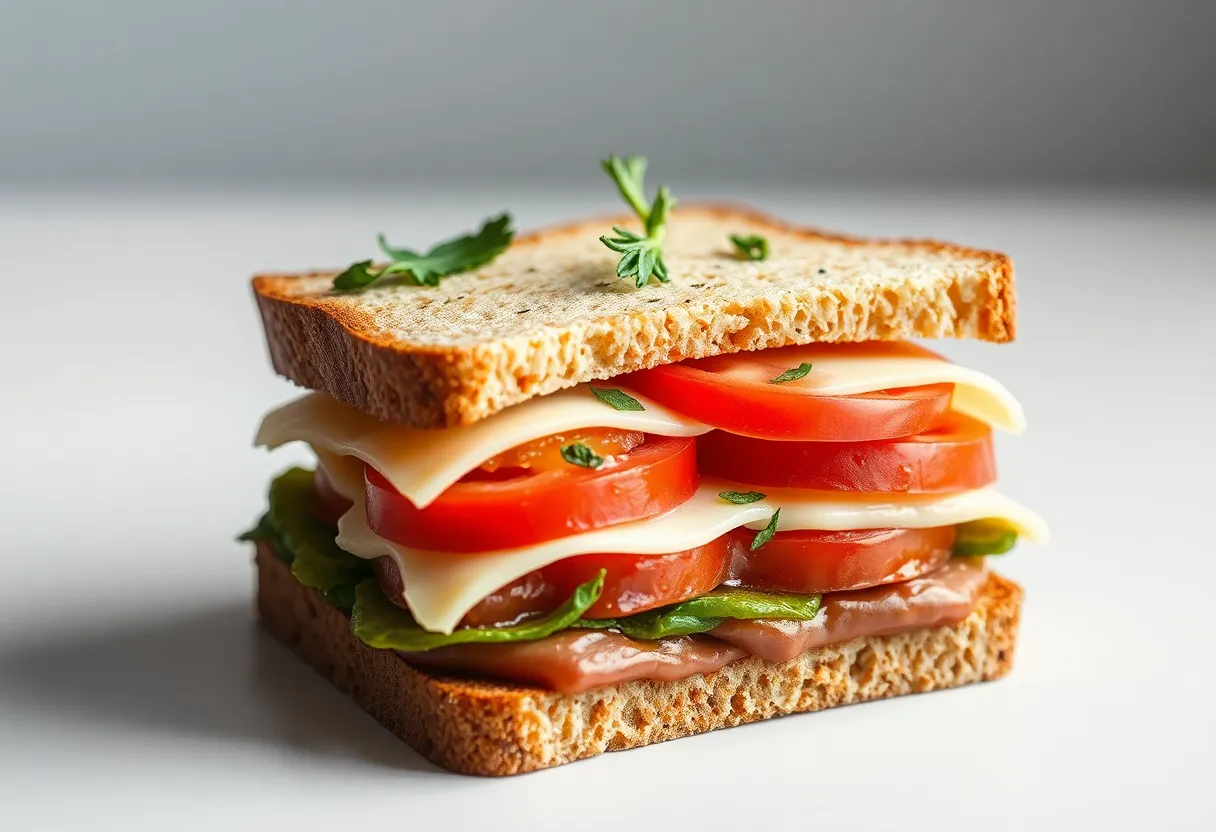
Impossible "Gourmet" Sandwiches
Why it's slop: Appetizing AI food photos attached to fake recipes and scam pages — the picture looks delicious, the recipe would poison you.
How to spot it: Ingredients float or merge into each other, sauces obey no gravity, the cross-section geometry could never survive an actual cut, and the sesame seeds repeat in identical clusters.
Reported: AI-generated images and videos flooding social feeds have been widely documented. Wikipedia — AI slop
Example generated for illustration. Not a real viral image.
Fake Sympathetic Flight Attendants
Why it's slop: Batch-generated portraits of service workers paired with invented sob stories, built to farm "bless her heart" comments from older users.
How to spot it: The same flawless face appears across different posts, uniform details change between photos, the cabin background repeats, and the hands are usually hidden or subtly wrong.
Reported: AI-generated images and videos flooding social feeds have been widely documented. Wikipedia — AI slop
AI memes are slop wearing a clown nose. The joke is often the failure itself, and the volume is the strategy. Each example below illustrates a real, widely observed meme-slop pattern, with the visual tells that separate a crafted joke from a generated one.
Example generated for illustration. Not a real viral image.
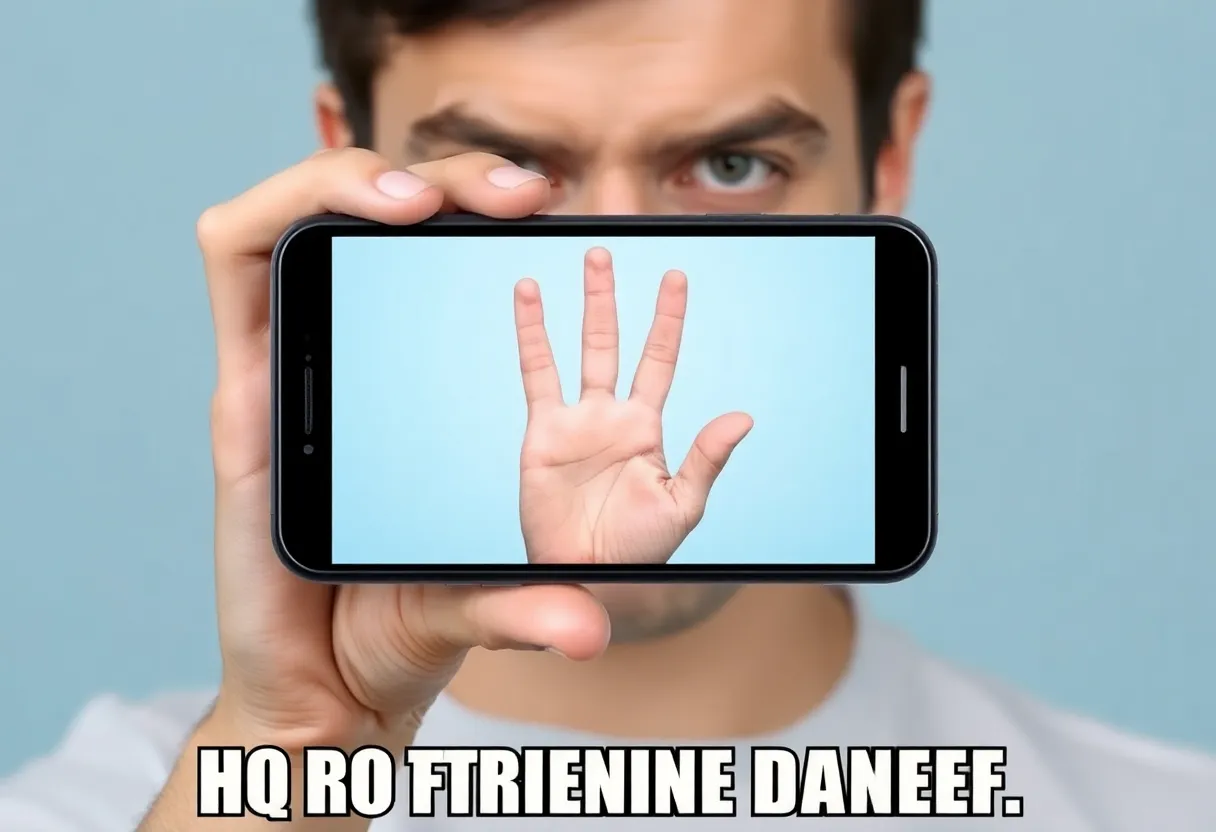
The "That's AI" Reaction Meme
Why it's slop: AI images mocking AI images still teach the feed that this content earns engagement — slop about slop is still slop.
How to spot it: Template composition reused across accounts, caption text rendered inside the image itself, and the same hand or background errors the meme is mocking.
Example generated for illustration. Not a real viral image.
The Group-Hug Blob
Why it's slop: A woman hugging her dog while a religious figure materializes behind her and three people melt into one embrace — a viral favorite for exactly the wrong reasons.
How to spot it: Count the arms against the number of people, trace each hand to its owner — several attach to the wrong shoulders — and look for faces that repeat with tiny variations.
Reported: Multi-figure AI images with interleaved limbs circulate widely as engagement bait. Wikipedia — AI slop
Example generated for illustration. Not a real viral image.
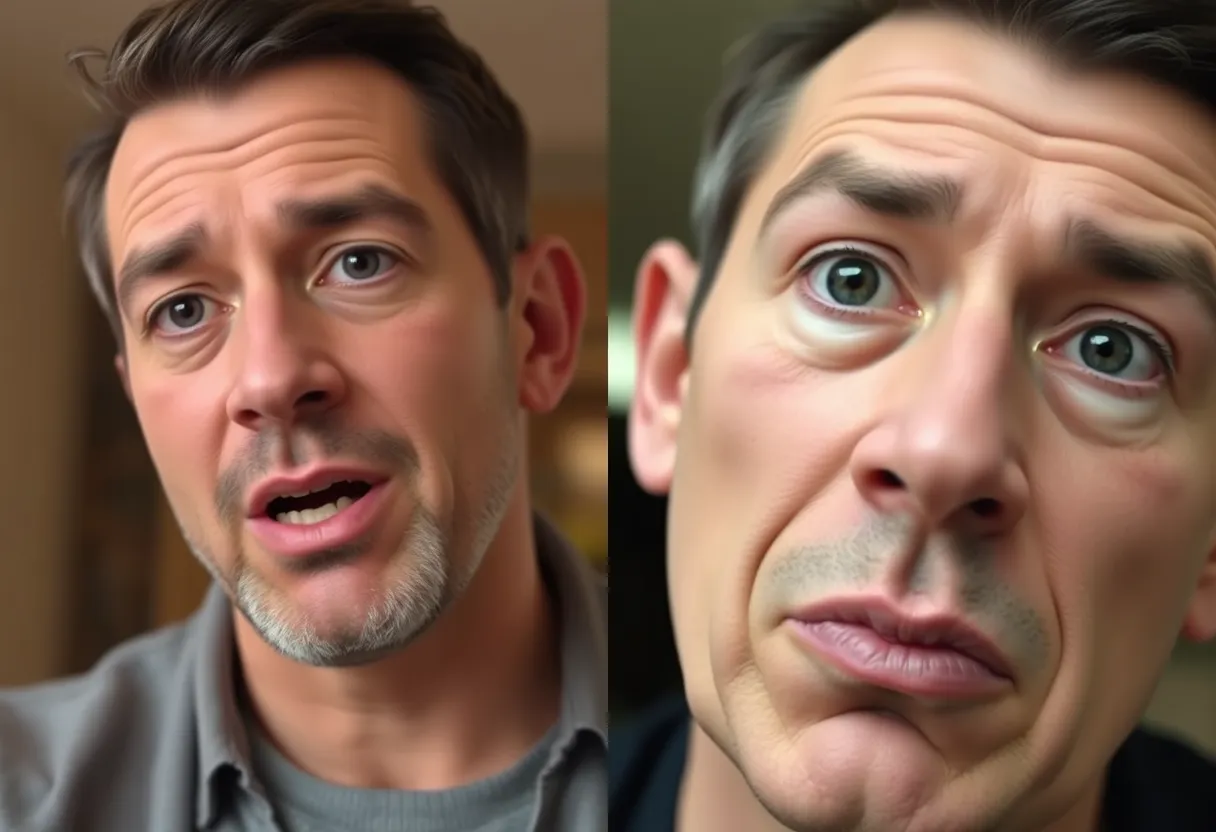
Celebrity Face-Swap Gags
Why it's slop: Famous faces dropped into absurd scenes for cheap laughs — and, in worse variants, cheap scams.
How to spot it: Face lighting that disagrees with the scene's light direction, a halo edge where hair meets the background, and a jawline or teeth line that shifts between frames.
Video slop adds motion to the tells: gaits that slide, mouths that drift, physics that negotiate. Several examples below describe real, publicly reported fraud and disinformation patterns — where slop stops being annoying and starts being dangerous.
Example generated for illustration. Not a real viral image.
The Cowboy Walks Into Uncanny Valley
Why it's slop: AI-generated music promo footage passed off as a produced video — the whole "shoot" never left the prompt box.
How to spot it: The gait slides rather than steps, the sunset light casts no consistent shadows, and denim textures smear when the legs move.
Reported: AI-generated music videos have drawn criticism as slop despite polished surfaces. Wikipedia — AI slop
Example generated for illustration. Not a real viral image.
Celebrity Deepfake Demonstrations
Why it's slop: Publicly documented demos proved a face could be swapped convincingly — the technology behind both jokes and crimes.
How to spot it: Lip sync drifts at the end of long sentences, skin texture turns waxy under movement, and the blink rate is measurably off from natural rhythm.
Reported: Celebrity deepfake demonstrations have been publicly documented since 2017. Wikipedia — Deepfake
Example generated for illustration. Not a real viral image.
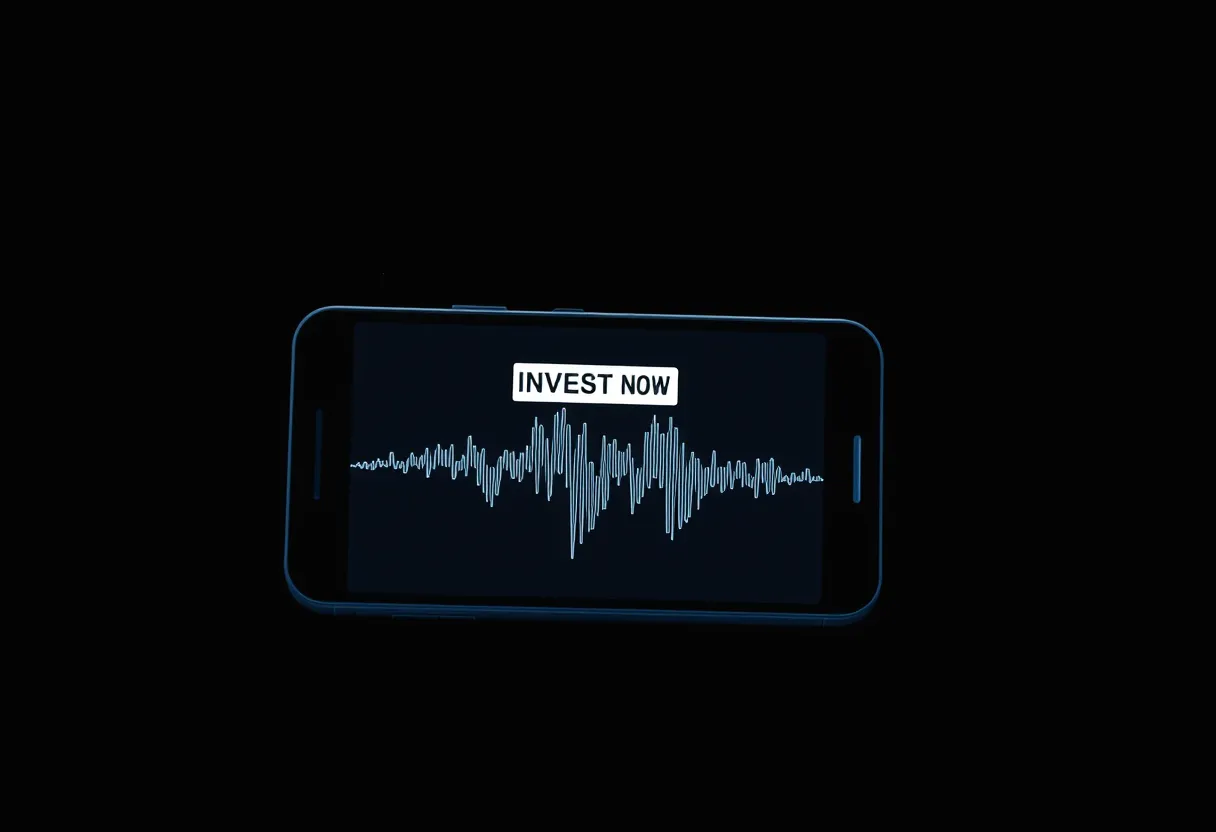
Voice-Clone Investment Scams
Why it's slop: Fraudsters cloned a well-known consumer-finance campaigner's voice to push fake investment schemes — slop with a bill attached.
How to spot it: Flat prosody with no real emotion, missing breaths between phrases, suspiciously perfect audio quality, and always — always — an urgency to move money.
Reported: Voice-cloning fraud impersonating public figures has been widely reported. Wikipedia — Deepfake
Text slop is quieter than image slop but far more common. Each example below is one tell — what it looks like, why models produce it, and a short generated sample (labeled as such) so you can train your eye. These are the same signals our detector checks.
The Em Dash Epidemic
Why it's slop: Models reach for the long dash the way a tired cook reaches for salt — several per paragraph is a fingerprint human typists almost never leave.
How to spot it: Multiple em dashes inside a single paragraph. Most people type hyphens or commas; AI prose chains elegant dashes like confetti.
AI-generated sampleIn today's market — a market defined by constant change — only the agile — truly agile — organizations survive.
Why it's slop: A stable of pet words appears in model output far more than in human writing — when three show up in one passage, the author was not paying attention.
How to spot it: Cluster-words: delve, tapestry, testament, myriad, plethora, pivotal, foster, robust, intricate, multifaceted, underscore, embark — especially in metaphor chains.
AI-generated sampleThis tapestry of features is a testament to the team's dedication, and invites users to delve into its multifaceted potential.
Most AI slop collapses under thirty seconds of attention. The tells that work best are physical and specific — not vibes:
Count the fingers. Extra, missing, or fused digits remain the most reliable image tell.
Trace the arms. Compare arm length to the torso, follow each joint, and check that hands grip rather than overlap what they touch.
Check the pets. Tail count and attachment point, fur direction against the light, pupil shape in bright scenes.
Look at the eyes. Slop portraits catch the light but hold no expression — the "dead eyes" of a face with nobody behind it.
Read the background. Signage that is decorative gibberish, reflections that ignore the scene, repeated silhouettes stamped down a skyline.
Feel the rhythm in text. Uniform sentence length, stacked adjective trios, and pet words like delve and tapestry — the text tells page breaks each one down.
How to Avoid AI Slop
If you publish: use AI as a draft tool, never as the publisher. Verify every fact and citation, cut the template phrases, add first-hand experience, and edit until it sounds like you. If you consume: slow down on anything emotional + outrageous + unsourced — that combination is the slop business model.
Before you publish, run your draft through the free AI Slop Detector — it checks the most common text and image tells in seconds, entirely in your browser.
Frequently asked questions
What qualifies as AI slop?
AI slop is low-value content mass-produced with AI tools and published with little or no human review. It qualifies as slop when it exists mainly to farm clicks, likes, or ad revenue instead of helping the reader: generic phrasing, no original insight, no real author accountability, and often outright fabrications.
What does slop mean in AI?
"Slop" is borrowed from farmyard animal feed — cheap, low-grade filler. In the AI context it means text, images, audio, or video generated in bulk by AI models and dumped onto feeds, search results, and app stores faster than anyone can check it. The key idea is quantity over quality, not "made by AI" alone.
Why do people say AI slop?
The term spread in 2023–2024 as a shortcut for "AI-generated junk flooding the internet." People say it because it captures two things at once: the content is machine-generated, and it is shoveled at audiences in industrial volumes. It is deliberately less polite than "AI-generated content" — the bluntness is the point.
What are some examples of AI slop?
Classic examples include the "Shrimp Jesus" images that swamped Facebook, AI-generated food photos paired with inedible recipes, deepfake celebrity scams, auto-generated news sites publishing made-up stories, and endless blog posts stitched from the same template phrases like "in today's digital age."
What are the biggest AI fails?
Visually: extra fingers, melted hands, stretched arms, pets with the wrong tails, and signage that dissolves into gibberish. In writing: invented facts, fake citations, and confident nonsense about real people. Some of the most-shared fails are marketing images from big-budget campaigns that shipped with anatomically impossible hands.
How do I identify AI slop?
For images, inspect hands, teeth, eyes, jewelry, and background logic — count the fingers. For video, watch mouths, hands, and physics. For text, look for template phrases, perfectly uniform sentence rhythm, and generic claims with no sources. Our free AI slop detector checks the most common tells in seconds.
What is the 30% rule in AI?
There is no official standard. "The 30% rule" usually refers to informal guidelines circulating online — for example, keeping AI assistance under roughly a third of a piece, or treating detection flags on about a third of a text as a warning sign. Treat any fixed percentage with suspicion: quality depends on how AI is used and reviewed, not on a magic ratio.
How to avoid AI slop?
Use AI as a draft tool, not a publisher. Add human judgment to every step: verify every fact, cut cliché phrases, include first-hand experience and real examples, and edit until the piece sounds like a person. To check work before publishing, run it through our free slop detector, then review the flagged passages yourself.
Is AI slop bad?
It is bad for readers, who waste time on content that looks informative but is not. It is bad for the web, because it crowds out genuine work and pollutes search results. AI-assisted writing is not inherently bad — the harm comes from publishing unreviewed bulk output as if it were real, checked work.
How do you pronounce AI slop?
Just like it looks: "slop" rhymes with "top" or "cop" — /slɒp/, one syllable. Say "A-I slop" ("aye-eye slop"). The word's blunt, unglamorous sound is part of why it caught on.